Automatic Sliding Gates in Western Sydney
A sliding gate is usually the right answer when a driveway is short, sloped, or sits hard against the footpath. The deciding factor is the run beside the opening, and that is something a local installer checks on site before talking about panel styles.
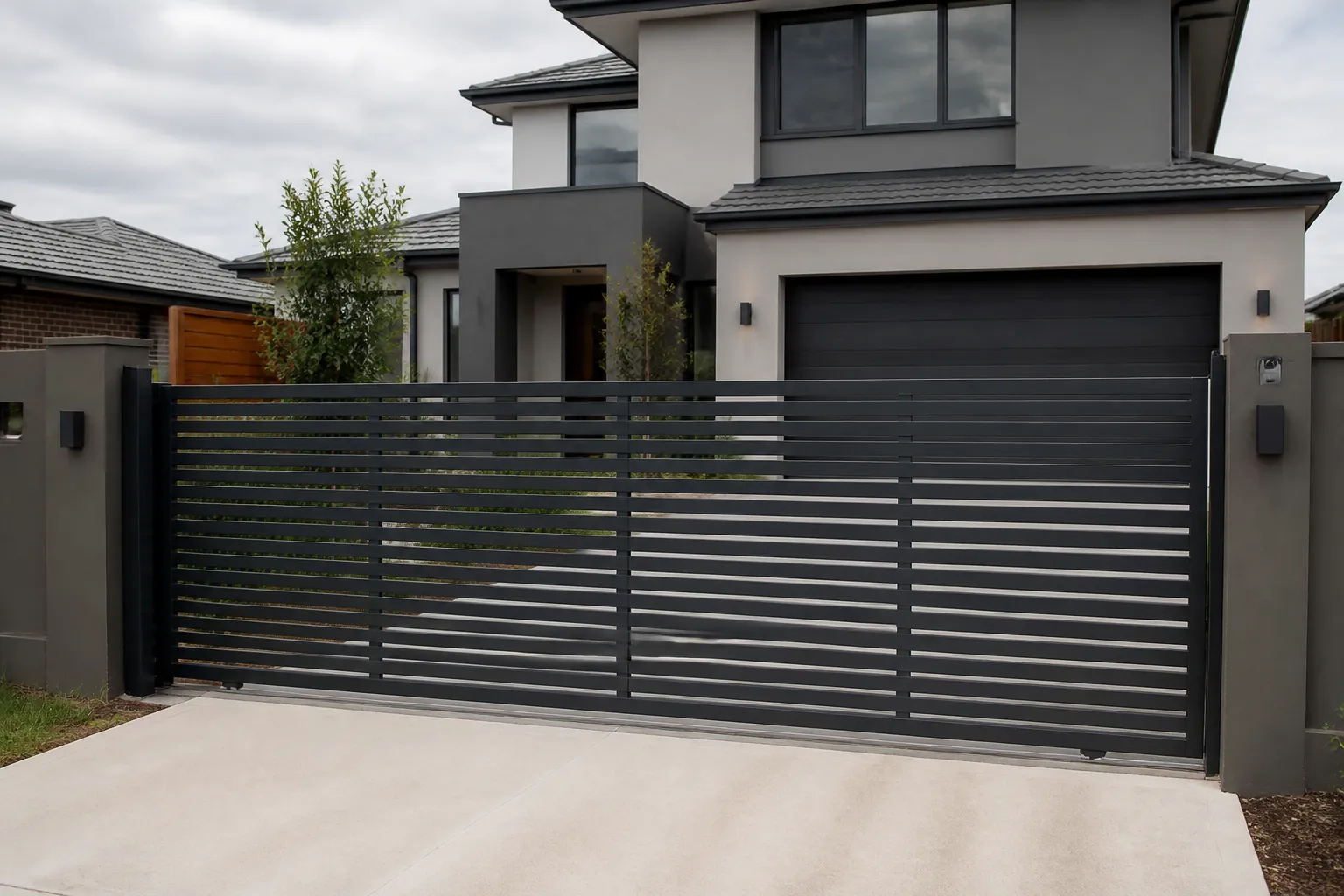
Why sliding gates suit so many Western Sydney blocks
A large share of Western Sydney housing sits on blocks where the garage is close to the street. Project homes in estates like Oran Park, Gregory Hills, Marsden Park and Schofields often have a driveway only a car length or two deep. A swing gate needs that depth to open into, and a parked car or a bin can stop it halfway. A sliding gate moves sideways, parallel to the boundary, so the driveway depth stops mattering.
Sliding gates also cope better with fall. Plenty of driveways in the older parts of Blacktown, Seven Hills and Campbelltown rise or drop from the kerb. A swing leaf on a slope has to clear the ground through its whole arc, while a sliding gate only needs a level line along the boundary.
The one thing you need: side clearance
The trade-off is room beside the opening. A sliding gate parks next to itself, so you need a clear run along the fence roughly equal to the width of the gate, plus space for the motor at one end. On a typical estate block that run is often taken up by a letterbox, a meter box, a garden bed or the neighbour's driveway.
Before you request a quote, walk the front boundary and note:
- Total width of the driveway opening
- What sits along the boundary on the side the gate would slide to
- Whether the ground along that run is level, or steps up or down
- Where the nearest power point or switchboard is
That list saves a lot of back and forth once an installer is on site.
Track or trackless
Most residential sliding gates run on a steel track set into the driveway, with wheels under the gate and a toothed rack along it that the motor drives. Tracks are simple and robust, but they collect leaves, gravel and the odd kid's toy, and a track that is not kept clear is the most common reason a sliding gate starts to stall.
Cantilever gates hang off rollers behind the opening and never touch the driveway. They need an even longer run beside the opening, because part of the gate stays behind the rollers, but they suit gravel driveways, rural-residential properties around Kemps Creek, Llandilo and the Camden fringe, and anywhere a track would be a constant cleaning job.
Materials
Aluminium slat and batten designs dominate new estates because they are light, they suit the facade styles builders are using, and they are easy on the motor. Steel frames clad in aluminium or timber-look panels are common on larger or heavier gates. Whatever the finish, ask the installer what the gate weighs, because that figure decides which motor is suitable.
Rules worth checking
Under the NSW exempt development rules, fences on a front or road boundary in residential zones are generally limited to 1.2 metres, and gates must not open outwards. Sliding gates sidestep the outward-swing issue, but a taller gate, a corner block, or a property listed on the State Heritage Register may need approval, so check with your council (Penrith, Blacktown, Parramatta, Liverpool, Campbelltown, Camden or the relevant council for your suburb) before you commit. If you are in a newer estate, read your s88B instrument and the estate design guidelines too, since many restrict front fencing.
The motor, controls and safety devices should be suited to the gate and installed with reference to AS/NZS 60335.2.103, the Australian standard for electric drives on gates. Any new circuit or hard-wired connection to a gate motor in NSW is electrical wiring work, which must be done by a licensed electrician.
Next step
Send us the width of your opening and a photo of the front boundary. We pass it to a local installer who services your area, and they arrange a site visit before giving any price. If you are weighing up the alternative, see automatic swing gates, or read about choosing a gate for a caravan or trailer driveway.
Why choose us for automatic sliding gates
- Works on short estate driveways where a swing leaf has nowhere to go
- Copes with driveways that rise or fall from the kerb
- Track or cantilever options for concrete, pavers or gravel
- Side clearance and power checked on site before any price
- Installers who work locally across Western Sydney
Automatic Sliding Gates: common questions
How much room do I need beside the driveway for a sliding gate?
Roughly the width of the gate again, along the fence on the side it opens to, plus space for the motor. Cantilever gates need a little more than that because part of the gate stays behind the rollers. An installer measures this on site, but checking for letterboxes, meter boxes and garden beds along that run before you enquire is a good start.
Can a sliding gate go on a sloping driveway?
Usually, yes. A sliding gate only needs a level line along the boundary, not a level driveway, so it is often the better choice on a slope than a swing gate. If the boundary itself steps, the installer may suggest a stepped track, a cantilever design or some minor concrete work.
Do I need council approval for a sliding gate?
Many front gates and fences fall under NSW exempt development, which generally limits road boundary fences in residential zones to 1.2 metres. Taller gates, corner blocks, heritage-listed properties and estates with design covenants can change the answer, so confirm with your council and check your title documents before you commit.
Tell us about your driveway
Send your suburb, opening width and what you need. We connect you with an independent local installer who visits before giving any price.